In short: Whisky gets its colour from the cask it matures in, not from the distillation process. While darker whisky can indicate certain cask types or longer aging, colour alone doesn’t determine quality or flavour.
When it comes to whisky, colour is often the first clue to what lies within the glass. That rich golden hue, soft amber glow, or deep, burnished copper tells a story—about time, cask, and craft. While it’s easy to assume that darker means older or better, the truth is a little more nuanced.
In this guide, we explore what affects the colour of whisky, what it tells us (and what it doesn’t), and how The Glenlivet’s own expressions showcase a spectrum of beautifully balanced tones.
What gives whisky its colour?
Whisky doesn’t begin life as golden, amber, or bronze. In fact, the natural colour of whisky fresh from the still is completely clear—like water. All the colour you see in the bottle comes later, and it’s shaped almost entirely by the maturation process.
The role of the cask
The biggest influence on whisky colour is the cask it matures in. During aging, the spirit interacts with the wood, drawing out pigments, tannins and flavours.
- American oak barrels, often used for bourbon before being repurposed for Scotch, tend to give lighter shades of gold and amber, along with notes of vanilla, honey and orchard fruits.
- European oak casks, especially those that have held sherry or wine, can impart a deeper hue—richer ambers and mahogany tones—alongside dried fruit and spice character.
The size of the cask, its level of charring or toasting, and how many times it’s been used all impact the final colour. First-fill casks (those being used for the first time to age whisky) generally give the most intense colour and flavour, while refill casks will create lighter, more subtle results.
Learn more about the different types of whisky casks.
Time matters—but not always how you think
It’s true that, in general, the longer whisky sits in oak, the more colour it absorbs. That’s why many older whiskies have a deeper tone. But age alone isn’t the whole story. A 12-year-old whisky matured in first-fill sherry casks might look darker than a 15-year-old aged in refill bourbon casks. Colour is a clue, but not a rule.
Does whisky ever get coloured artificially?
Some whiskies may include caramel colouring (E150a), especially core expressions. While it does not significantly affect flavour, it is used to ensure visual consistency across batches. This is a common and legal practice in Scotch whisky production, and the type used at The Glenlivet ensures the whisky in your glass looks as good as it tastes.
The natural colour of whisky
In its purest form, whisky comes off the still crystal clear. The colour transformation happens entirely in the cask. So when we talk about “natural colour,” we’re usually referring to whisky that hasn’t been adjusted with caramel colouring and reflects only the aging process.
It’s worth noting that the colour doesn’t always indicate strength or intensity of flavour. A pale straw whisky might be bright and bold, while a rich amber pour could be soft and mellow. That’s the beauty of single malt—it surprises you.
Does whisky colour affect taste?
Whisky colour doesn’t directly determine flavour, but it often reflects the type of cask used during maturation. For example, darker whiskies may come from sherry or wine casks, which can introduce richer, spiced or dried fruit notes.
However, colour alone isn’t a reliable indicator — lighter whiskies can still be complex, while darker ones may be more mellow than expected.
The Glenlivet colour spectrum
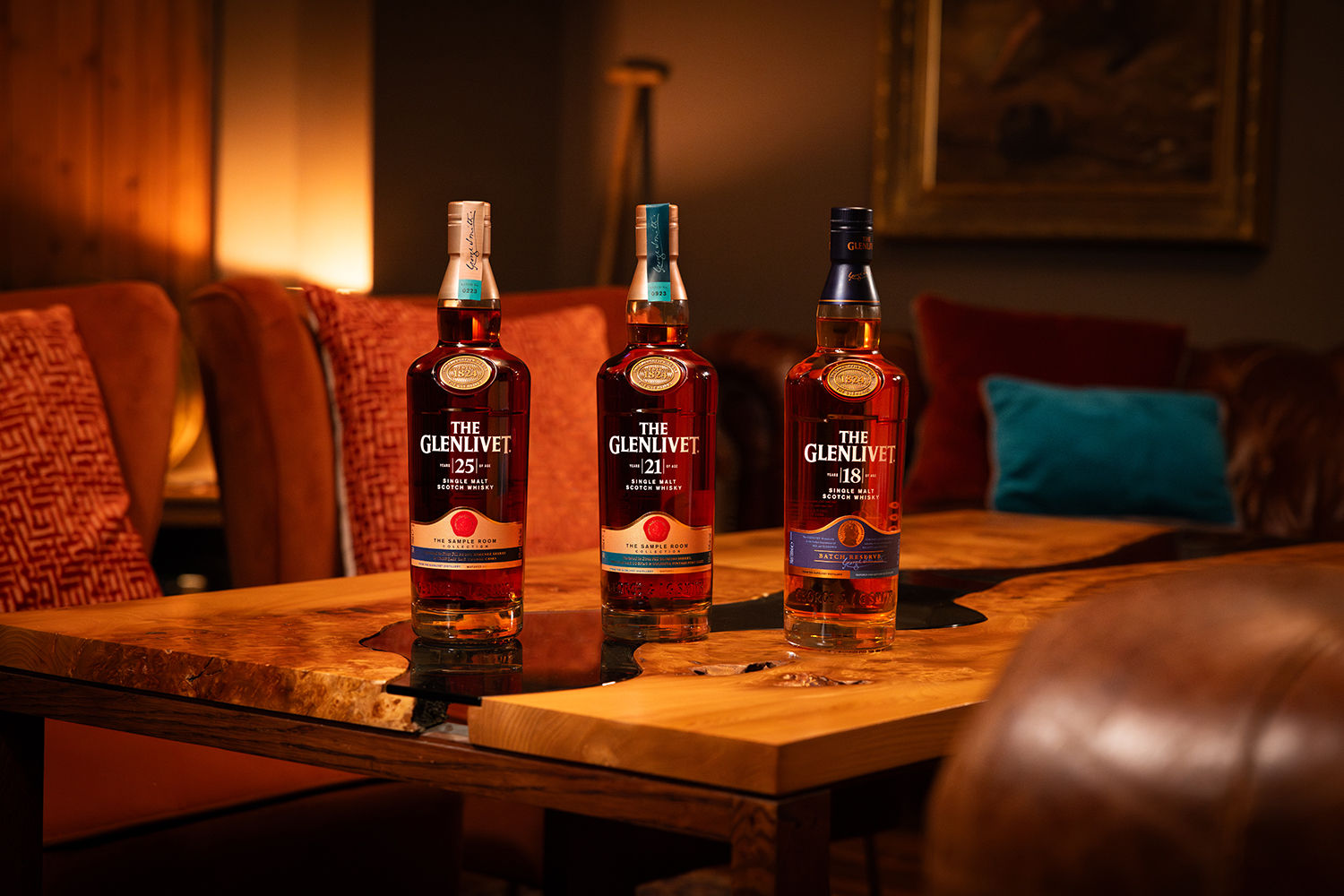
Each bottle of The Glenlivet tells its own story, not only in flavour but in colour. Our single malts range from soft gold to radiant amber, reflecting both the casks used and the nature of the whisky inside.
The Glenlivet 12 Year Old
One of the most iconic expressions in the collection, The Glenlivet 12 Year Old boasts a pale golden hue with hints of sunlit honey. Aged in a combination of American and European oak, its colour mirrors its character—light, balanced, with notes of fresh fruit and citrus.
The Glenlivet 15 Year Old
This expression is matured in a proportion of French Limousin oak, bringing a warmer, richer colour. You’ll find deeper amber tones, hinting at its slightly spicier, oak-driven profile. Our 15 Year Old is a whisky that looks as refined as it tastes.
The Glenlivet 18 Year Old
Complex, layered and luxuriously smooth, The Glenlivet 18 Year Old reveals a deep golden-amber colour—an elegant reflection of the time it has spent in a combination of first and second-fill casks. Expect depth in both colour and character.
The Glenlivet 21 Year Old
A statement bottle in every sense, The Glenlivet 21 Year Old is matured in a mix of Oloroso sherry, Troncais oak Cognac and Colheita port casks. The result is a richly hued whisky with tones of deep copper and polished brass—suggesting the complexity within. It’s a whisky to savour slowly.
Enjoying the visual experience
One of the joys of drinking whisky is the visual experience—watching light filter through the glass, seeing legs form as the whisky coats the sides, and observing the hue change as it catches the light.
Serving your whisky in the right glass—a tulip-shaped nosing glass or a cut crystal tumbler—can enhance this visual enjoyment. Whether you’re pouring neat, on the rocks, or in a cocktail, colour is part of the ritual.
Discover the types of whisky glasses we recommend.
FAQs
Why is whisky different colours?
Whisky colour comes from the cask it is aged in, with different woods and previous contents affecting the final hue.
Is darker whisky better?
Not necessarily. Colour depends on cask type and aging conditions, not quality.
Does clear whisky exist?
Yes. Whisky is clear when it comes off the still — it only gains colour during maturation.
In summary: colour as a clue, not a conclusion
Whisky is a sensory journey, and colour is just the beginning. While it can offer hints about the cask, age and character, it’s only one part of the full experience.
At The Glenlivet, every bottle reflects not just a colour, but a philosophy: smooth, refined, crafted with care, and steeped in heritage. Whether your dram glows golden or shimmers deep amber, what matters most is the quality in every sip.
Ready to explore the full range? Discover The Glenlivet collection and see just how beautifully diverse whisky can be—in colour, flavour, and spirit.